


Choose sterling silver if you want a bright white metal that darkens with time and polishes back. Choose brass if you want warm gold tones and do not mind that it mellows and can leave a faint mark on skin. Neither is the lesser metal. We cast most of our core designs in both, I wear both, and after fifteen years of making jewelry I still pick differently depending on the piece. Here is how the two differ in the hand, on the skin and over the years, and which one I reach for when.
What each metal actually is
Sterling silver is 925 parts silver in a thousand, which is where the 925 stamp comes from, and the rest is usually copper. Pure silver is too soft to hold a stone or a shape, so the copper is there to make it work. Brass is an alloy of copper and zinc: no silver in it at all, which is why it is gold-colored rather than white. Bronze, which people use as a synonym for brass, is copper and tin, a different alloy, darker and browner. What we cast in this studio, two metalsmiths and no production line, is sterling silver and brass.
Color, weight and how the carving reads
Silver is cool and white and takes a mirror polish. Brass is warm, closer to old gold than to new, and it reads richer in low light. Hold the same ring in both and the difference is obvious before you think about it: silver looks like moonlight, brass looks like a candle.
Silver is also the heavier of the two. The same design cast in sterling weighs a little more than it does in brass, which some people like on a statement ring and some do not.
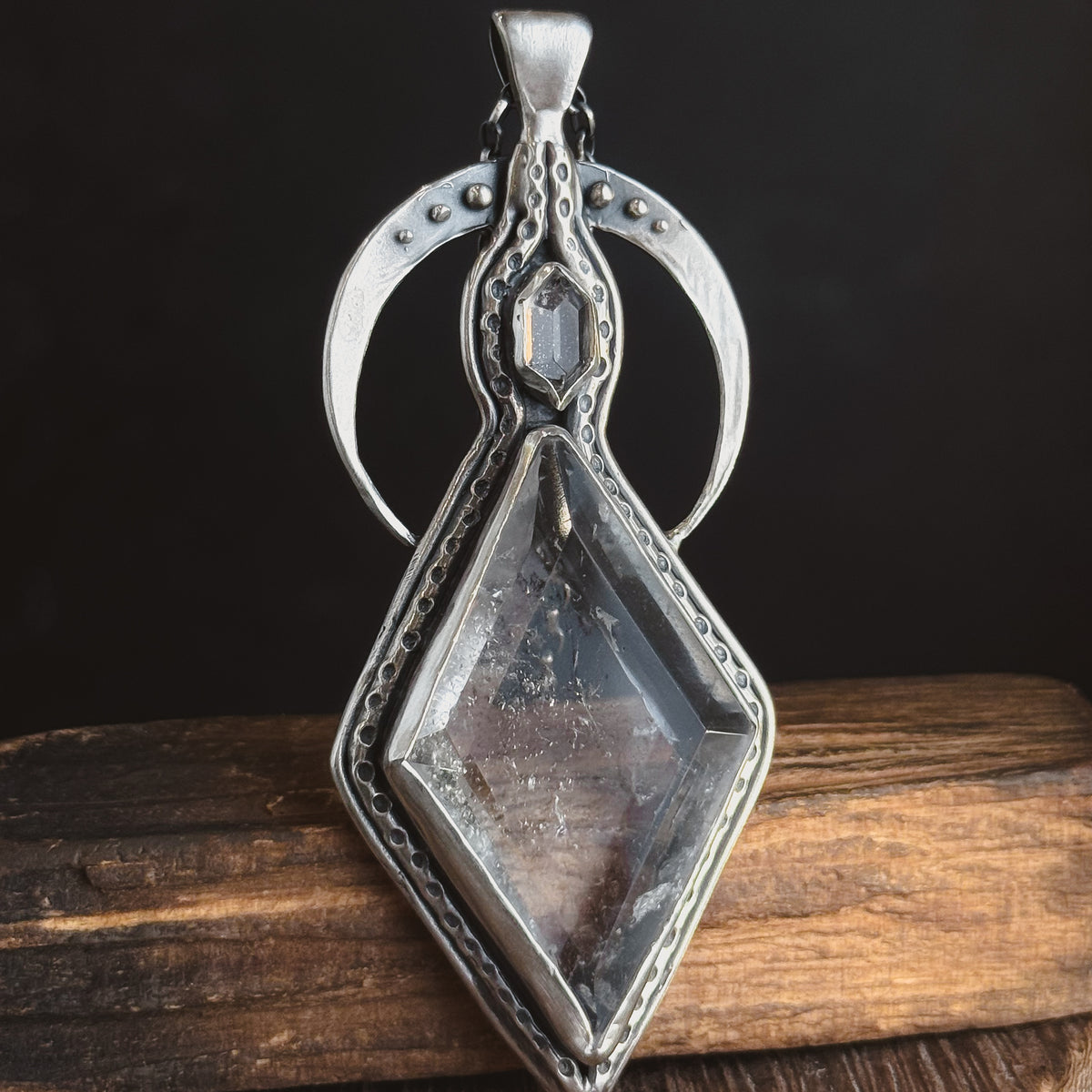
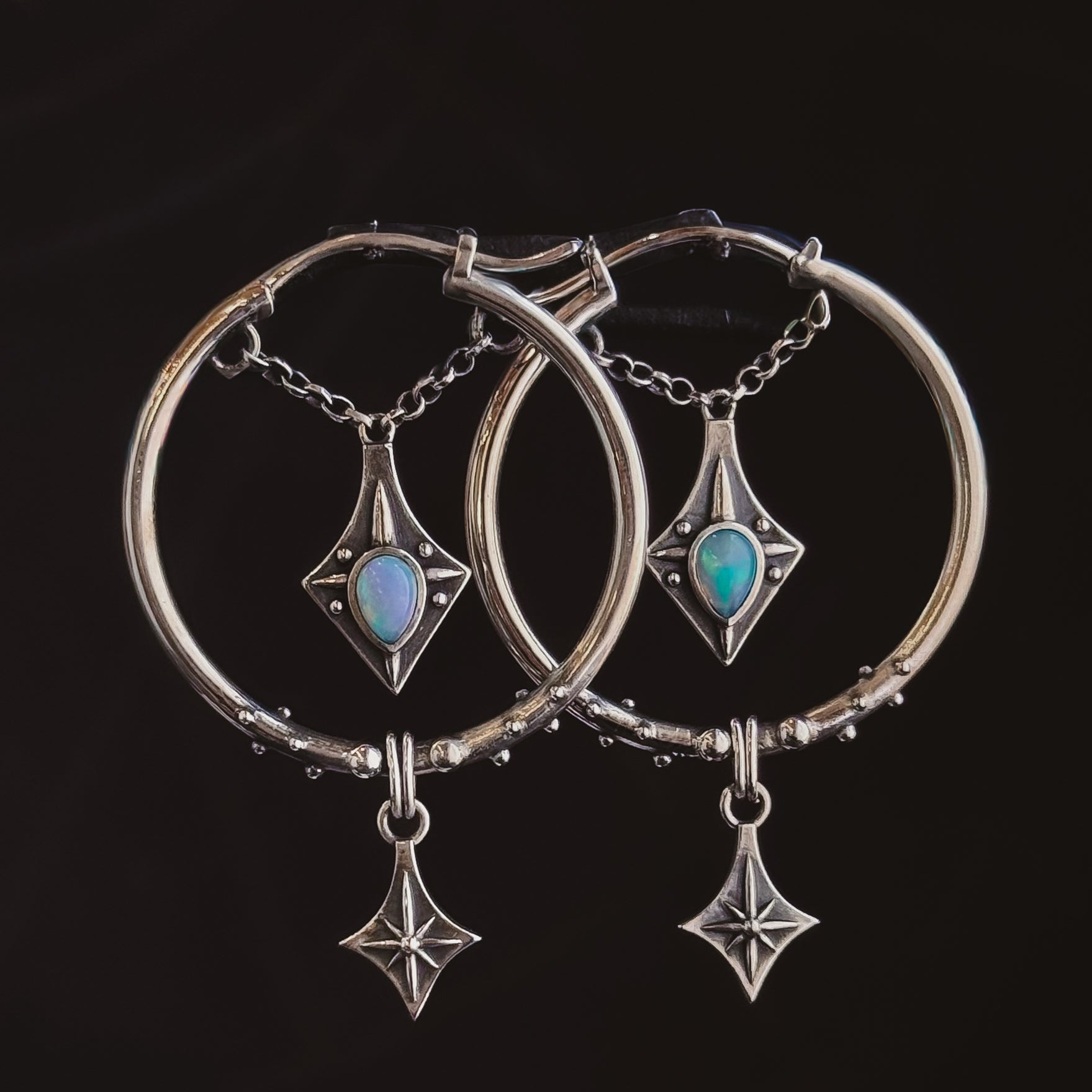
Both metals take oxidation. We darken the recesses of every piece by hand so the carving reads, then polish the high points bright. On silver that gives you black valleys and white peaks. On brass it gives you a deep antique brown under a gold shine, the look we call antiqued brass. The Moon Phase Shield Ring is a good place to see the difference: the same black onyx, the same hand-carved phases, in sterling or in brass, and the two look like they were made for two different people. They were.
How each one ages
Silver tarnishes. Sulfur in the air finds it and turns the surface gray and then dark, faster near water and in humid rooms. That is normal, it is not damage, and a polishing cloth on the raised surfaces takes it off while leaving the oxidized recesses alone. Do not use a liquid silver dip; it strips the dark finish along with the tarnish and leaves the carving flat.
Brass does not tarnish the way silver does. It mellows. The bright gold goes warm, then deepens toward brown, and the high points stay bright wherever your skin touches them. Some people love a brass piece most after a year. If you do not, the same cloth brings the shine back. Avoid lemon juice, vinegar and baking soda on our brass; the home remedies work by stripping the surface, and they take the antiquing with it.
What both metals share is this: the places you touch stay bright, and the places you do not stay dark. After a year, a piece carries the map of how you wore it. That patina is yours, and I think it is the best thing about handmade metal.
Skin: the honest part
Brass can leave a faint green mark on skin. It is the copper in the alloy reacting with your skin chemistry, sweat, lotion or humidity, it is harmless, and it wipes off with soap and water. Some people never see it, some see it on hot days, and some see it every time. Sterling has far less copper in it and rarely does this.
If your skin marks easily, the practical answer is sterling for rings, where the metal sits tight against skin all day, and brass for pendants and earrings, where it barely touches you. We have a whole post on brass and skin coming, so I will leave the detail there.
Which metal I pick for which design
Most of our core designs come in both because I want you to choose. The Witchclaw Fingertip Ring, the daggers, the sigil pendants, the faceted quartz stackers: all cast in sterling and in brass from the same carving. Most of those pairs live in our Signature collection.
Some pieces only come one way. Our Astral collection is sterling only; those pieces were designed for white metal and I have not cast them any other way. The one-of-a-kind drops go whichever way the stone sends me. The same labradorite that sits in silver in our ouroboros necklace has gone into brass in the one-of-a-kind rings and chokers more than once, because against that warm metal the blue flash reads as something else entirely.
The stone is chosen first. The metal is built around it. That has been the order of operations in this studio from the beginning.
Questions we get about silver and brass
Does brass jewelry last? Yes. Solid brass is a durable metal that has been used for jewelry and tools for thousands of years, and ours is cast, not plated, so there is no coating to wear through. It will change color with time, warming and deepening, and it polishes back if you want it bright. Keep it dry, store it in a pouch, and it will outlast most of what else is in the drawer.
Is sterling silver better than brass? Better for some things. Sterling is the choice if your skin reacts to copper, if you want a white metal, or if you want a ring worn against the skin all day. Brass is the choice if you want gold tones without gold, a lighter ring, and a patina that warms rather than darkens. Same carving, same hands, two different metals. Neither one is a compromise.
Can I wear brass and silver together? Yes, and we do. The warm and cool metals set each other off, and a brass stacker beside a silver shield ring reads as deliberate rather than mismatched. The only thing to watch is storage: keep them in separate pouches so they do not rub, since the softer of the two will take the scratch.
Pick the metal the way you would pick the stone: by what it does to you when you hold it. Then let it age with you.
From the studio
A few of the designs we cast in both metals, so you can see the same carving read two ways.

- Moon Phase Shield Ring: Moon Phase Shield Ring, black onyx in sterling silver
- Moon Phase Shield Ring: the same shield ring, black onyx in brass
- Witchclaw Finger Tip Ring: the Witchclaw Fingertip Ring, a hand-carved claw in sterling silver
- Witchclaw Fingertip Ring: the Witchclaw Fingertip Ring in antiqued brass

