

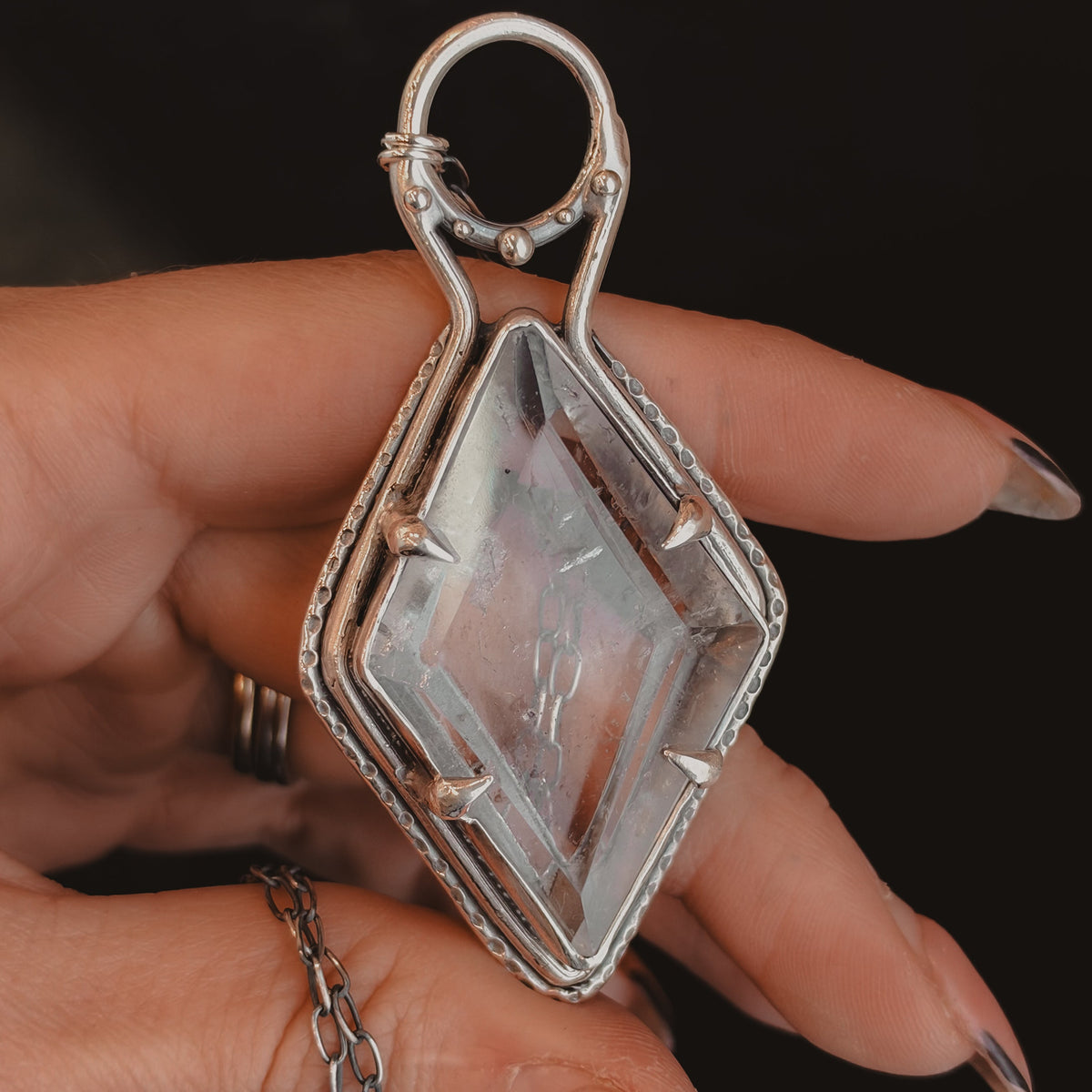
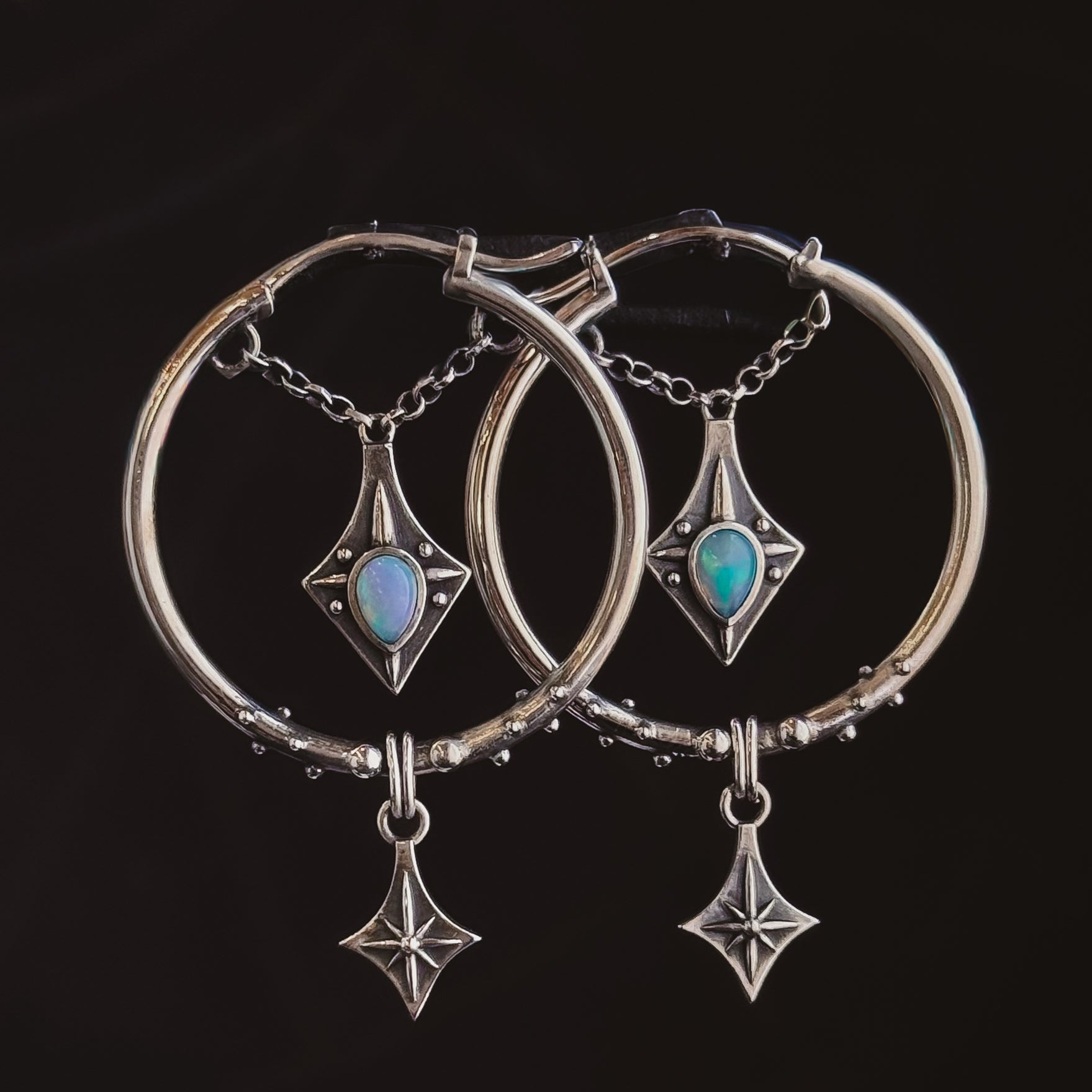

Oxidized silver is sterling silver that has been darkened on purpose. The surface is given a patina, a controlled layer of charcoal gray to black, and then the high points are polished back to bright metal so the design reads in light and shadow. Most of the sterling pieces that leave our studio are finished this way, and it is the first thing people ask when they see one in person: why is it dark in the grooves? Here is the honest answer, what it means for how your piece ages, and the one thing I will beg you not to do to it.
What oxidized silver actually is
Sterling silver is 92.5 percent silver, and the rest is usually copper. Left alone, silver slowly reacts with sulfur in the air and darkens. That is tarnish, and most people spend their lives fighting it.
Oxidizing is the same reaction, done deliberately. After a piece is cast, cleaned up and set, we darken the whole surface with a patina solution until it goes a deep charcoal. Then we go back in with polishing tools and bring the raised areas back to bright silver. The recesses, the places a cloth cannot reach, keep the dark. What you end up with is one piece of metal in two tones: the carving in shadow, the edges in light.
It is a surface finish, not a plating. Nothing is laid on top of the silver that can peel. The dark lives in the metal's own skin, which matters for how it wears.
A note on words. Blackened, antiqued and oxidized sterling all mean the same finish. Technically the patina is a sulfide, not an oxide, so the word is a little loose, but it is the one everyone uses, including us.
Why we darken it: the carving has to read
Every piece in this studio starts as a wax model carved by hand. The things I care about in the wax, the depth of a crescent, the edge of a shield, the engraved stars on a stacker band, are small. Bright, freshly polished silver is a mirror, and a mirror hides detail. Light bounces off every surface at once and the carving flattens out.
Patina is how the carving gets its voice back. Darken the recesses and the eye can suddenly see the geometry: where the metal rises, where it falls away, where the stone sits. On the Theia Crown Stacker the oxidized finish is what makes the kite shape look carved rather than stamped. On the Triple Moon Goddess Necklace, the dark between the three moons is what makes them read as moons at all. Take the patina away and you have three bright shapes in a row. Leave it and you have the cycle.
So when you ask why our pieces are dark in the recesses, the answer is: because that is where the design lives.
It also fits what we make. These are talismans, armor, things you reach for on the hard days. A piece that is all mirror shine says something different from a piece that keeps its shadows. I want ours to look like they have been somewhere.
How it wears, and why that is the point
Oxidized silver changes on your body, and it is supposed to.
The high points, the parts of a ring that touch your other fingers, your pocket, your keyboard, your coffee cup, are already bright when the piece ships. Over months of wear they get brighter and smoother. The recesses, which nothing touches, stay dark. The contrast does not fade, it sharpens. A shield ring you have worn for a year looks more like itself than it did on day one.
Some lightening of the dark does happen over time, especially on pieces that take a lot of friction: a stacker worn between two other rings, a pendant that rides against a zipper. That is normal. Think of it the way you think about a leather jacket or a cast iron pan. The wear is the finish.
If a piece ever loses more of its dark than you like, the patina can be put back. It is a surface finish, so it goes on again the same way it came off. Reach out and we will tell you the best route.
What not to do: the silver dip
This is the one.
Silver dip, the liquid tarnish remover that comes in a jar with a little basket, works by dissolving tarnish off the surface of silver. It cannot tell the difference between the tarnish you do not want and the patina we put on by hand. Dip an oxidized ring and it comes out uniformly bright, flat, and about half as interesting as it was. The carving disappears.
The same goes for the aluminum foil and baking soda trick you may have seen online, which lifts tarnish through a chemical reaction and takes the patina with it.
What to do instead is simple:
- Wipe the piece with a soft, dry cloth after wearing it.
- For a deeper clean, warm water, a drop of mild dish soap and a soft toothbrush, then dry it completely. The patina will not mind.
- Use a polishing cloth only on the high points, lightly, if you want them brighter. Keep it out of the recesses.
- Store it dry, out of the bathroom, in a pouch or a closed box. Damp air is what tarnishes the bright parts between wears.
The stones we set need their own handling, and our stone-by-stone guide covers them: How to Clean Crystal Jewelry, Stone by Stone.
In the studio
Patina is the last thing that happens to a piece before it goes in the box, and it is the step I will not rush. A ring comes out of casting, gets cut from its sprue, filed, sanded and set. Then it goes dark, all of it, and for a minute it looks like a shadow of itself. Then the polishing brings the edges back up, and the thing I carved in wax weeks earlier finally shows up in metal. It is the moment the piece becomes the piece.
Browse the sterling silver rings to see the finish across the shapes we make most, from the slim stackers to the shields.
Questions we get about oxidized silver
Does oxidized silver wear off? The patina sits on the surface, so the high points that get touched will brighten with wear, and the recesses that nothing reaches stay dark. That is the finish doing what it was designed to do. Heavy friction can lighten more of it over time, and it can be reapplied if you ever want it darker again.
Is oxidized silver real sterling silver? Yes. Oxidizing is a finish, not a different metal. Our oxidized pieces are cast in sterling silver and then darkened; under the patina it is the same 92.5 percent silver alloy as a bright-polished piece, and it is worth the same.
Can I polish oxidized silver? Lightly, and only where you want it bright. A soft polishing cloth on the raised edges is fine. Avoid silver dip, foil and baking soda baths, and anything that promises to make the whole piece shine, because those strip the dark out of the recesses and flatten the design.
The dark is not a flaw and it is not dirt. It is the part of the piece I made for you to see.
From the studio
A few of the sterling pieces where the dark in the recesses is doing the most work.

- Theia Crown Stacker Ring: kite-set garnet stacker with a deep oxidized finish
- Triple Moon Goddess Necklace: the three moon phases in sterling silver, amethyst at the full moon
- The Queen's Ring: double-stacked Herkimer diamonds in blackened sterling silver
- Moon Phase Shield Ring: smooth black onyx in a sterling shield ringed by the moon phases

