

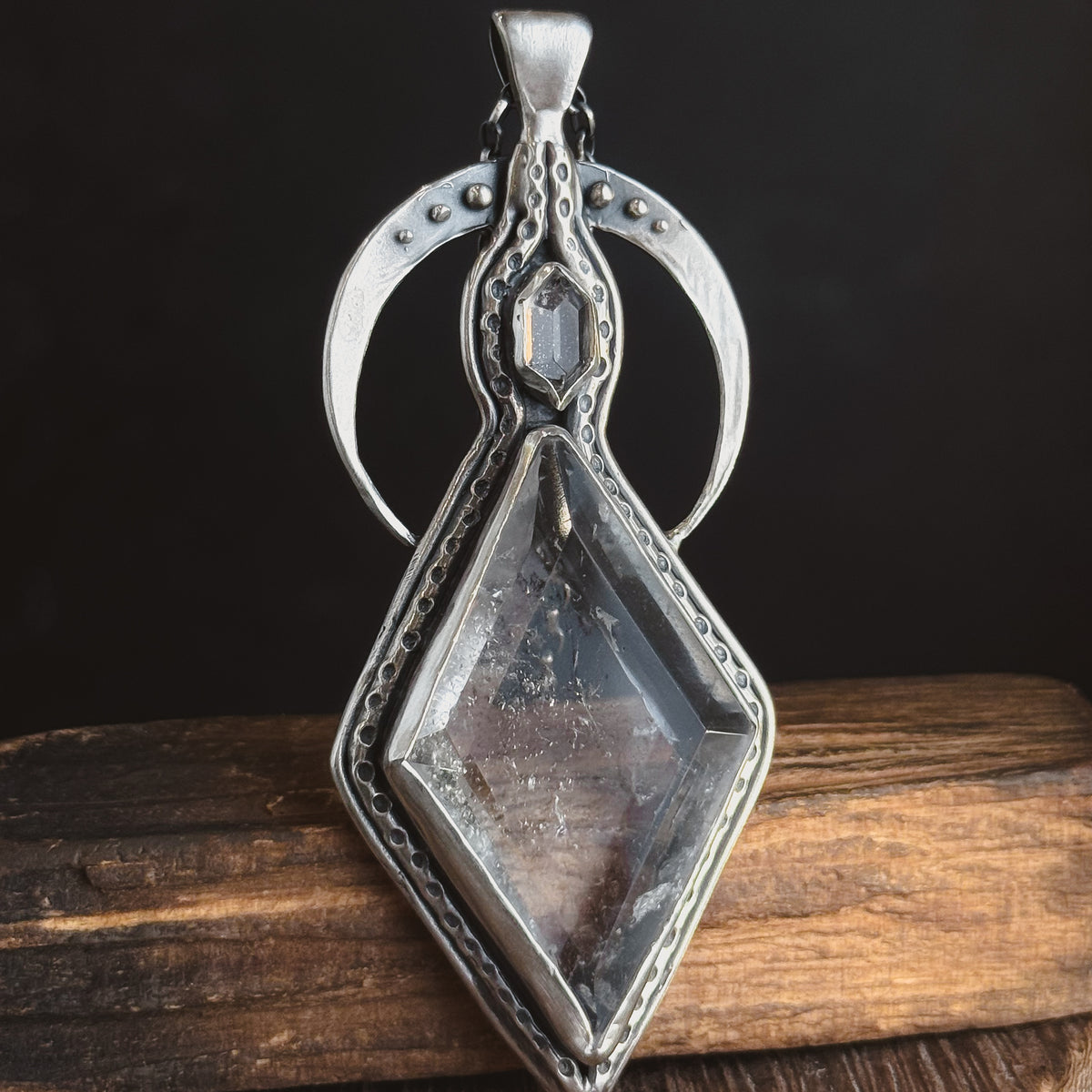
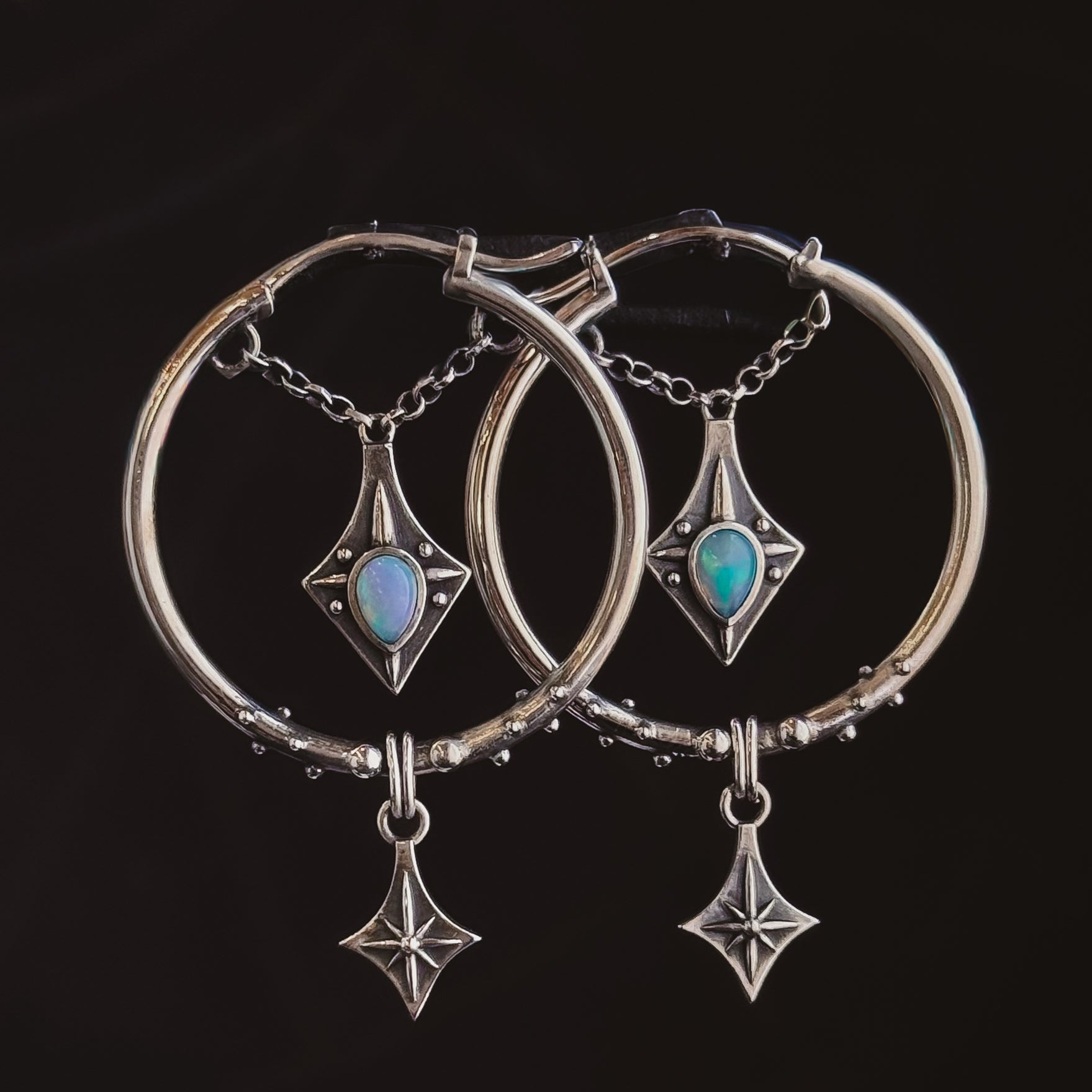

Black onyx, clear quartz and garnet can be washed with warm water and mild soap. Labradorite and moonstone can take a quick rinse but should never be soaked. Amethyst fades if you leave it in the sun. And none of them, in any of our pieces, should ever see salt water, an ultrasonic cleaner, or a jewelry dip meant for gold. This is the stone-by-stone care guide we send to customers, with the rules for the sterling silver and brass the stones are set in, and a note at the end on energetic cleansing, which is a different thing.
Two kinds of clean
There is physical cleaning, which is about the stone, the metal and the dirt of daily life, and there is energetic cleansing, which is about what the stone has been holding for you. This guide is the first one. For the second, read our guide to cleansing your gemstones, which covers moonlight, sound, smoke and intention. Do both. A clean stone that has not been cleansed is just shiny.
The rules that apply to every piece
Our jewelry is hand carved in wax, cast in sterling silver or brass, then set, oxidized and polished by hand. That means three things for care:
- Take it off before water. Showers, swimming, dishes, the ocean. Water is not the enemy of most of these stones, but it strips the oxidation out of the recesses of the metal, and chlorine and salt will pit and tarnish silver and brass.
- Store it dry and apart. A soft pouch or a lined box. Stones scratch each other; quartz will scratch onyx, and both will scratch moonstone. Keep pieces from rubbing.
- Never use an ultrasonic cleaner or a chemical dip. Ultrasonics can crack stones with natural inclusions and loosen settings. Dips meant for plain gold strip the dark oxidized finish that is part of every design we make.
Now, stone by stone.
Black onyx
Onyx is a dense chalcedony, one of the toughest stones we set. Warm water, a drop of mild dish soap and a soft cloth or a very soft brush are all it needs. Dry it fully. Onyx is dyed in much of the commercial market, so avoid harsh chemicals on principle, but ours tolerate ordinary washing without trouble. Store it away from quartz, which is harder and will scratch it.
Browse the onyx collection.
Clear, smoky and rutilated quartz
Quartz is hard and stable. Wash it the same way: warm water, mild soap, soft cloth, dry completely. Rutilated quartz, with its golden needles, has no special needs; the rutile is sealed inside the crystal. Two cautions: avoid sudden temperature changes (do not run a cold stone under hot water), and keep quartz points away from softer stones in your jewelry box, because quartz wins every fight.
Labradorite
Labradorite is a feldspar, softer than quartz, and its flash lives in thin internal layers. A quick rinse in lukewarm water with a soft cloth is fine. Do not soak it, do not scrub it, and never use a brush with stiff bristles. Dry it immediately and store it on its own. If the flash looks dull, it is almost always surface residue: a dry microfiber cloth brings it back.
Browse the labradorite collection.
Rainbow moonstone
Moonstone is also a feldspar and the most delicate stone on this list. It can chip on a hard knock and it does not like heat. A damp soft cloth is the right tool; skip the soap unless it is truly dirty, and never soak it. Take moonstone rings off before anything involving your hands and hard surfaces: gym, gardening, moving furniture. Treat it like the moon, gently and at night.
Browse the rainbow moonstone collection.
Amethyst
Amethyst is purple quartz, so it washes like quartz: warm water, mild soap, soft cloth. The one thing to know is light. Amethyst can fade with long exposure to direct sunlight, so do not leave it on a windowsill or charge it in the sun. Charge it in moonlight instead, which is what it is for anyway.
Browse the amethyst collection.
Garnet
Garnet is hard and takes ordinary washing well. Warm water, mild soap, dry fully. It is a stone that likes to be worn, and it holds its deep red without any fuss. Avoid the ultrasonic, as with everything here.
Sterling silver and brass: the metal is the hard part
The stones are usually fine. The metal is where our customers' questions come from.
All of our silver and brass is oxidized on purpose. The dark finish in the recesses is what makes the carving read, and it is applied by hand. Over time, two things happen: the raised surfaces polish brighter from wear (good, that is patina, and it is yours), and the whole piece can tarnish and go dull (not what you want).
To bring a piece back: use a soft polishing cloth on the raised surfaces only, and leave the recesses dark. Do not use liquid silver dip, which takes the oxidation with it. If a piece has gone truly dull, our Jewelry Revitalizing Cleaning Kit is what we use in the studio to restore oxidized sterling, and it comes with the cloth and the instructions.

Brass develops its own warm patina with wear. Some people love it; if you do not, the same cloth brings the shine back.
Keep the full set of metal rules in our Jewelry Care Guide.
When to clean, and when to cleanse
Clean a piece when it looks dirty or dull, or once a month if you wear it daily. Cleanse it, energetically, at the new moon, after you have been through something heavy, and before you give or receive it. The two can happen on the same night. Wash it, dry it, set it in the window, and let the moon do the rest.
Questions we get about cleaning crystal jewelry
Can I put black onyx in water? Yes. Onyx is dense and stable, and warm water with mild soap is the right way to clean it. Dry it fully and take the piece off before swimming or showering, for the metal's sake more than the stone's.
How do I clean labradorite without dulling the flash? Lukewarm water, a soft cloth, no soaking and no brushes. The flash dulls from surface residue, not from washing; a dry microfiber cloth after cleaning restores it. If it still looks flat, the stone needs light, not cleaning. Turn it in your hand.
Why has my silver ring gone dark all over? That is tarnish, and it is normal for sterling silver, especially near water and in humid air. A polishing cloth on the raised surfaces brings the shine back while keeping the oxidized recesses dark. If it is badly tarnished, use the Revitalizing Kit rather than a liquid dip, which would strip the finish.
A piece that is cared for lasts long enough to be handed down. That is the whole idea.

