


Jewelry tarnishes because of air, and the fix is to give it less air. Store sterling silver and brass closed, dry and soft, away from humidity and away from each other's stones, and most of the tarnish you have been fighting simply stops happening. Here is why it happens, what we do with our own pieces, and how to pack for travel so a ring comes home the way it left.
Why silver tarnishes (and brass darkens)
Sterling silver is 92.5 percent silver, and the rest is usually copper. Silver reacts with sulfur. Tiny amounts of sulfur compounds drift around in ordinary air, and when they land on silver they form a thin dark film called silver sulfide. That film is tarnish. It is not rust, it does not eat the metal, and it comes off. But left alone it keeps building, from a faint yellow to brown to black.
Humidity speeds it up. So does anything that gives off sulfur: rubber bands, latex, wool and felt, some papers, onions and eggs if you cook with your rings on, hot springs, and the air in some cities. A silver ring left on a bathroom counter is sitting in the worst room in the house: warm, wet, and full of products.
Brass is copper and zinc, so it does the copper thing instead. It darkens and warms toward brown rather than going black, and plenty of people love that patina. Either way the cause is the same, air and moisture on bare metal, and the storage rules are the same.
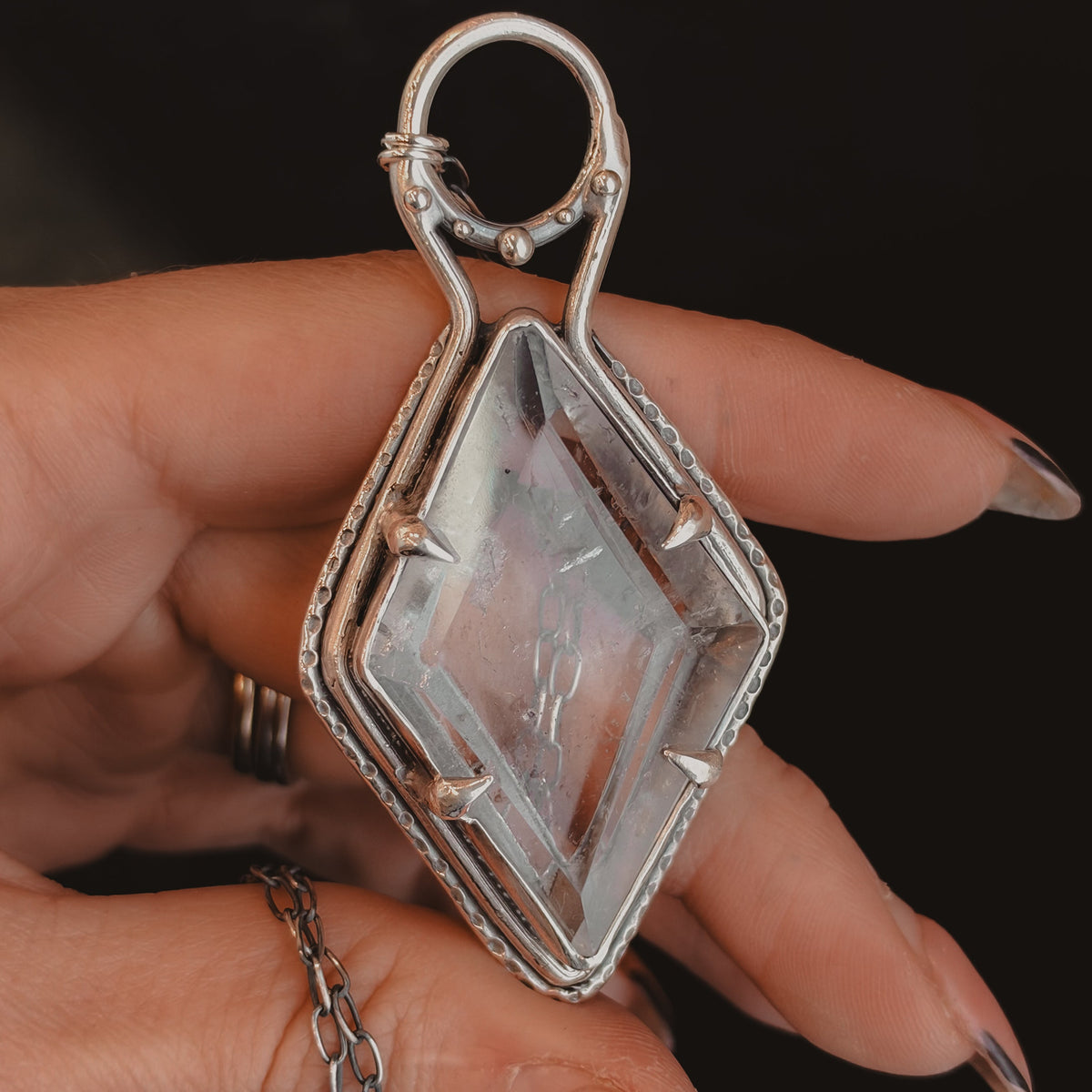
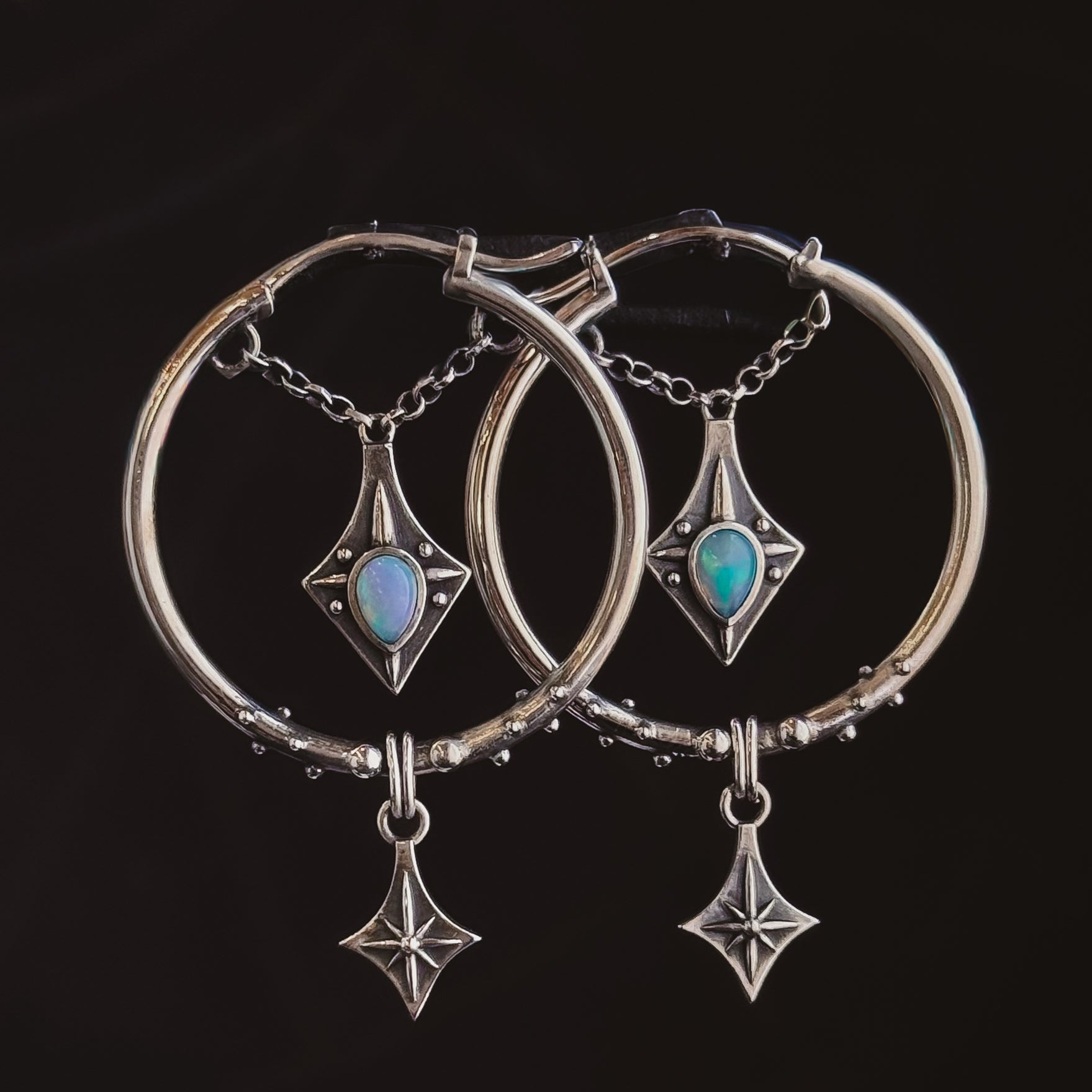
One wrinkle with our work: our pieces are oxidized on purpose. The dark finish in the recesses is a patina we apply by hand so the carving reads, and it wears bright on the high points over time. That dark is supposed to be there. Storing a piece well keeps the bright parts bright without you having to polish, and polishing is where people accidentally strip the recesses.
Closed, dark, dry, and a strip in the box
Air is the problem, so cut the air. A piece that lives in a closed pouch or a lidded box tarnishes far more slowly than one on an open tray or a hanging ring holder, however nice the tray looks on the dresser. Small zip bags, the plain kind, work very well: slide the piece in, press the air out, seal it. Not glamorous, but sealed away from the air, silver stays bright far longer than it does in the open. If you want something nicer to look at, a soft cloth pouch inside a lidded box does the same job.
Keep jewelry out of the bathroom. Steam from the shower is exactly the humid air tarnish wants. A bedroom drawer, a closet shelf, or a box on a dresser away from the window all beat the counter next to the sink. If you live somewhere humid, add a desiccant: the little silica gel packets that come in shoe boxes and vitamin bottles absorb moisture, and one in the jewelry box helps. Swap it out when it stops feeling dry. A stick of plain blackboard chalk does the same job in a pinch.
Then add an anti-tarnish strip. These are small squares of paper made to absorb sulfur before it reaches your silver. Drop one in the box or the pouch and it quietly does the work. They lose their power over time, so replace them every few months. Anti-tarnish cloth, sold as pouches or as lining for jewelry boxes, does the same thing in fabric form; wrap a piece in it and you have built a tiny sulfur-proof room.
Keep the stones apart
Most of what we make is set with stone, and stones scratch each other. Clear quartz is hard, a 7 on the Mohs scale mineralogists use, and it will scratch anything softer than itself: onyx, labradorite, moonstone, amber. A quartz point tossed into a dish with a moonstone ring wins every time, and the moonstone will show it.
So: one piece per pouch. If you only have one box, use the dividers, or wrap each piece in its own square of cloth. Necklaces hang, or lie flat with the clasp closed so the chain does not knot itself around the pendant. Earrings pair up in their own compartment.
This matters most for the softer stones in our work. Labradorite and rainbow moonstone are feldspars, softer than quartz, and amber is softer still. Give them their own corner.
Wear it, and how to travel with it
The best anti-tarnish method we know is you. A ring worn every day gets rubbed bright by sleeves, pockets and the ordinary friction of living, which is why the high points of an oxidized piece polish up on their own while the recesses stay dark. The pieces that tarnish worst are the ones that sit untouched in a dish for a season. If you love something, wear it. If you are between wearing it, put it to bed properly.
Packing is where good jewelry goes to get tangled. What works:
- One piece per small zip bag, air pressed out, chains clasped.
- A strip of anti-tarnish paper in with the silver.
- The bags together in a hard case or a zipped pouch, so nothing gets crushed under a shoe.
- The case in your carry-on, never checked.
- At the hotel, resist the bathroom counter. It goes back in the case between wears.
When it tarnished anyway
It happens. Humidity wins, a bag gets left open, a ring spends a summer in a drawer. Do not reach for liquid silver dip. Dip strips the oxidized recesses along with the tarnish and leaves the piece flat and bright all over, which is not how it was designed. A soft polishing cloth on the raised surfaces brings the shine back and leaves the dark where it belongs. For a piece that has gone truly dull, our Jewelry Revitalizing Cleaning Kit is the two-part system we use in the studio to bring oxidized sterling back.
The stone-by-stone details are in our guide to cleaning crystal jewelry. Physical cleaning and energetic cleansing are different jobs; for the second, read cleansing and charging your jewelry.
The pieces that get worn most, and so need a home most, are in our best sellers. A Moon Phase Shield Ring that goes on every morning deserves a pouch to come off into every night.
Questions we get about storing jewelry
Does storing silver in plastic bags prevent tarnish? Yes, if the bag is sealed with the air pressed out. Tarnish needs air and the sulfur in it, and a closed bag cuts both. Add an anti-tarnish strip for silver you will not wear for a while, and keep the bag out of the bathroom.
How do I store rings with stones so they do not scratch? One ring per pouch or compartment. Clear quartz and other hard stones scratch softer ones like moonstone, labradorite and amber if they rub overnight. A lined box with dividers or a handful of small cloth pouches solves it.
Should I take my jewelry off at night? For storage, yes. A ring slept in gets sweat and friction in all the wrong places, and a necklace chain knots. Take it off, wipe it with a soft cloth, put it in its pouch. It is the one habit that keeps a piece looking the way it did the day it arrived.
A piece that is put to bed well wakes up ready to be worn. That is the whole trick.
From the studio
The pieces you wear most are the ones that need somewhere to sleep, and the kit is what we reach for when one has gone dull anyway.

- Jewelry Revitalizing Cleaning Kit: the two-part cleaning system we use in the studio on oxidized sterling
- Moon Phase Shield Ring: smooth black onyx in a sterling silver shield, made to order
- Lilith Cross Necklace: the hand-carved Lilith sigil in sterling silver
- Crystal Ball Pendulum Necklace: a clear quartz sphere in a hand-fabricated sterling silver frame

